American Aviation Historical Society
MEMBERS SHOULD LOG IN FIRST TO ACCESS FULL ARTICLES
|
AAHS Journal, Vol. 48, No. 3 - Fall 2003 Table of Contents
|
|
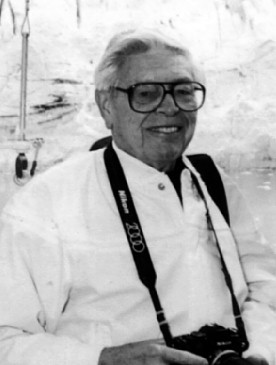
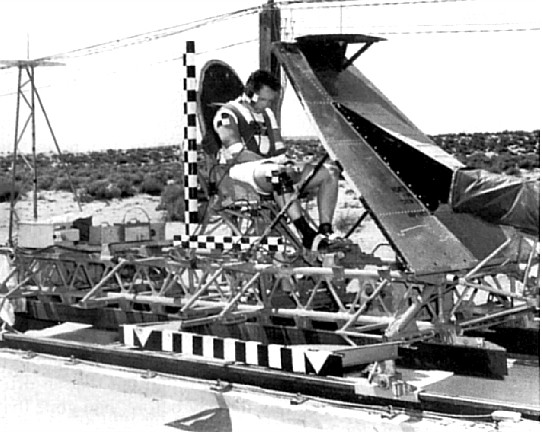
Gee Whiz! How Col John Paul Stapp Set the Land Speed
Record, Discovered Murphy's Law, and Might have Saved your Life. On
the evening of December 9, 1954, Lt. Colonel John Paul Stapp made it a
point to watch the sun set. It was, like the end of most New Mexico days,
spectacular. The drab desert landscape transformed suddenly into a deep
crimson vista, then yielded slowly, inevitably, to darkness. Stapp
observed the fading of the light to the end. It very well could be, he
thought, the last sunset he would ever see. |
|
|
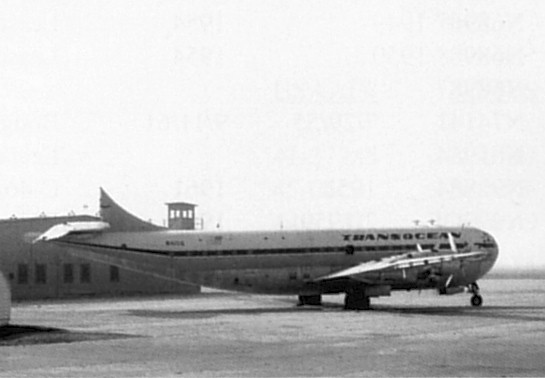
"Sky
Gypsies" The Transocean Airline Story I suppose one
could compare Orvis Nelson, the Founder and President of Transocean Air
Lines (TAL) in some ways to Gen. Curtis LeMay, the Commander-in-Chief of
the Strategic Air Command (SAC) from 1948-1957. Whereas LeMay had a
strategic strike force of bombers to reach anywhere in the world (B-36's,
B-47's and B-52's), Nelson had a global airline fleet of (DC-3's, DC-4's,
DC-6's, Stratocruisers and Super "Connies") that covered the
globe in the 1940s to 1960 and ready to go at anytime, in any direction. |
|
|
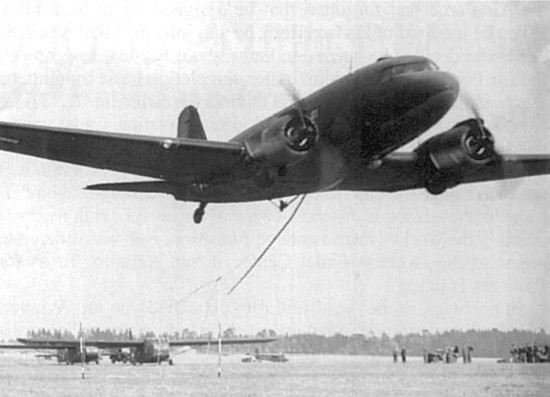
"Vertical Envelopment!" A story about
"Operation Varsity" based on the eyewitness account of Lt. Col.
Robert E. Thomas, USAFR (ret.) Ever heard of the
term "vertical envelopment"? Maybe. Know what it means? No.
Well, neither did twenty-year old Army Air Forces Second Lieutenant Robert
E. Thomas, a native of Anderson, Indiana, when informed to expect
immediate transfer to another air base for combat training of an
unspecified nature. Neither the location of the base nor the makeup of the
new unit was revealed to him, but he was told that an overseas combat
assignment would follow shortly. After departing his duty station and
spending two miserable days aboard a crowded troop train, Thomas, with
another group of pilots, arrived at South Plains Army Air Field in
Lubbock, Texas. There, they were confronted with a sight that turned their
blood to ice water: an airfield inhabited by huge numbers of box-like Waco
CG-4 troop Gliders! And the sandy-haired, boyish-looking pilot learned for
the first time what "vertical envelopment" meant: Landing an
attack force behind enemy lines by airborne means, which included not only
paratroops but large assault gliders carrying artillery, heavy weapons,
munitions, supplies, and other troops onto the battlefield. |
|
|
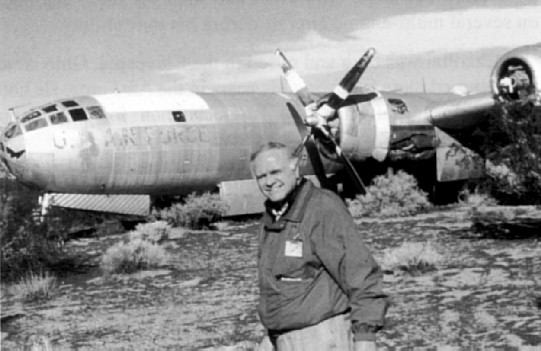
A Man and His Dream, Part 1: The Beginning Many dream of finding a
treasure, Tony Mazzolini's dream was of finding and recovering a WWII,
B-29 Boeing Super-fortress. After 12 years of grinding research, Tony
found what he was looking for, and then the struggle to obtain this
aircraft started. The aircraft is probably the last known B-29 airframe in
the world that is capable of being restored to an air worthy condition. |
|
|
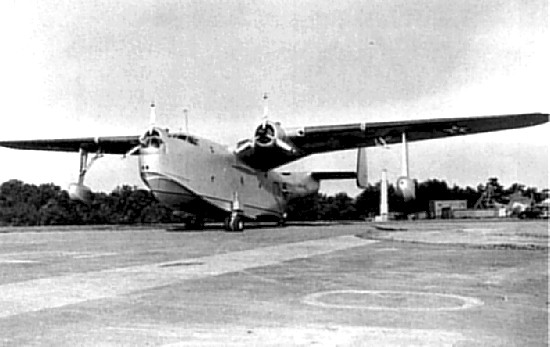
Martin's PBM Mariner 1937-1956
The Martin PBM Mariner seaplane was
deployed from 1940 to 1956 for a period of sixteen years. It was in
production for twelve years. Few planes of that era had that length of
production and fleet service. Glenn Martin had built his first plane at
Santa Ana, California in 1909. Like the Wrights, he left bicycle and auto
interests for the flying machine. He was in and out of a partnership with
the Wright brothers. By 1917, he had an aircraft plant in Cleveland, Ohio.
Martin was always innovative and fast from design to production. He built
aircraft for the army and the navy and later added some commercial airline
business. This diversity continued as long as his company produced
aircraft, well into the fifties. |
|
|
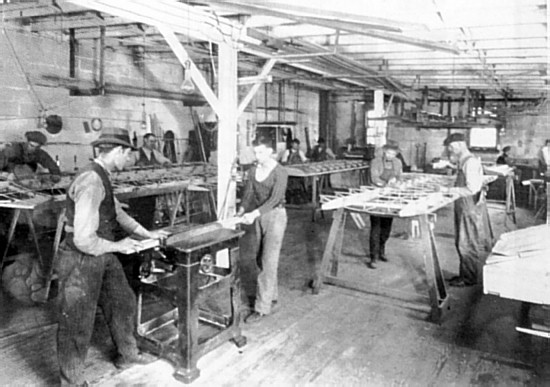
The airport
serving the Hagerstown, Maryland community and surrounding area is a story
rich in aviation history. Along with other cities and towns, Hagerstown
too had an interesting aviation infancy and era of early development. |
|
|
Aircraft
Photos by Emil Strasser: Part V, Cleveland 1947
In 1947, a new class
of racing aircraft was established at the Cleveland, Ohio nation Air
Races. The aircraft in the new class were limited to 190 cu. in.
engines, fixed pitch propellers and fixed landing gear and an empty weight
limit of 500 lbs. These small racers flew low over a 4-pylon, 15 lap,
2.2 mile course within easy sight of all. |
|