American Aviation Historical Society
MEMBERS SHOULD LOG IN FIRST TO ACCESS FULL ARTICLES
|
Excerpts from
|
||||||

|
and a Happy New Year From your volunteer Staff at AAHS HQ. |
|
|
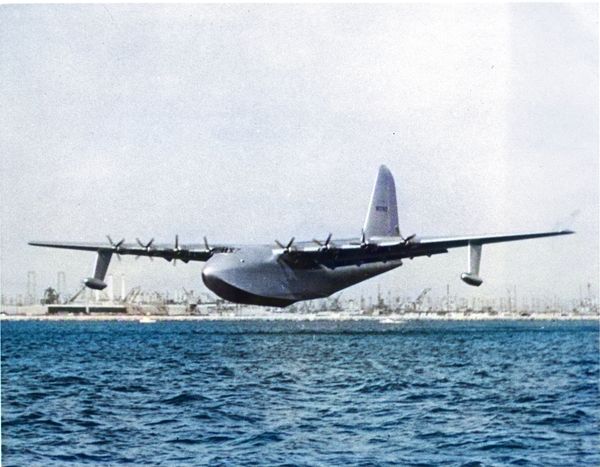
The Achilles Heel of the Hughes H-4 Hercules When I was a young engineer in 1954, working at Transformer Engineers in Pasadena, Calif., I met a production engineer named Herb Pass. Herb was an extremely talented engineer. I often worked with him in the production methods of new or modified products. He seemed very brilliant in relation to the work he was doing. One day we were having a sandwich at lunch, and I asked him why he was working so far below his obvious talent. He told me he was an airframe design engineer and worked on the empennage of the Hughes H-4 Hercules. He said he had talked Hughes out of using a three-finned vertical stabilizer. After the H-4 short test flight, Hughes fired Pass and told him he would never work in the aircraft industry again. As a young man, I didn’t pay much attention to the magnitude of the Hughes Flying Boat incident. I dismissed the story as a sad tale of woe. After this brief chat at lunch, we never spoke of it again. |
|
|
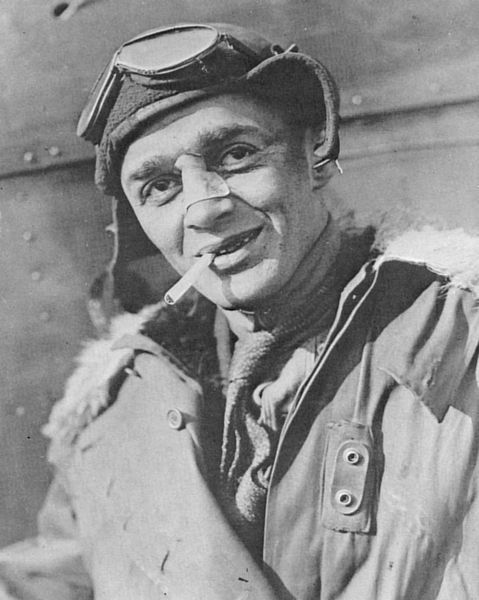
The First Night Air Mail: The Story of Jack H. Knight’s Epic Flight The young men who flew the mail during the early days of the U.S. Air Mail Service were generally cut from the same mold - young, adventurous and veterans of WWI. But Jack Knight’s life, both before and after his airmail days, was unusual. He was born James Herbert Brockett on March 14, 1892, in Lincoln Center, Kansas. When he was about a year old his mother, a school teacher, died and his father brought her body back to her hometown of Buchanan, Mich., where James and his older sister were adopted by his aunt and uncle, Dr. Melvin Knight and his wife Emma. |
|
|
Before 1926, although a gross generalization, civil aviation in the United States may be described as little short of completely unorganized chaos. To execute these tasks, the first Assistant Secretary of Commerce appointed to oversee all of this was William Patterson MacCracken, Jr. He was just 37-years old. A WWI era U.S. Army Air Service veteran himself, he was an unusually well qualified Presidential appointment, and unquestionably the right man for the job. |
|
|
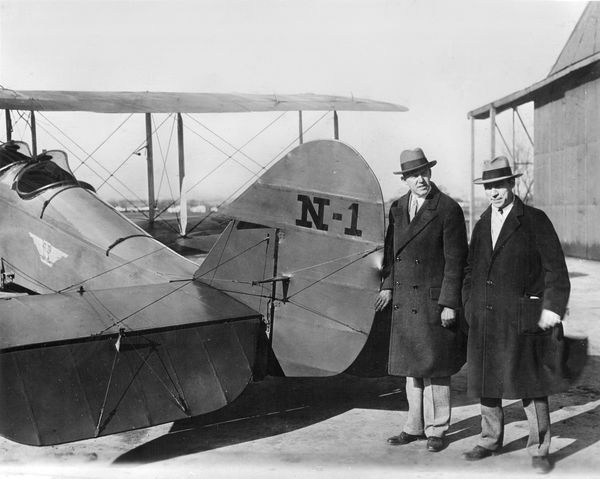
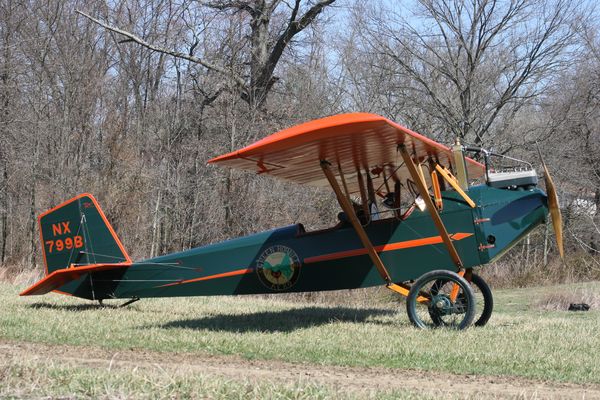
Bernard Pietenpol and the Birth of Homebuilt Aviation About 95 years ago a group of aviation enthusiasts concluded that the "big guys" had cornered the market on aircraft construction and sales, pricing most people out of owning airplanes. They set out to design planes that could be easily built and safely flown by novice pilots. Their success marked the beginning of the homebuilt movement. Much to the disapproval of traditional aircraft manufacturers, who lobbied for legislation to quash the nascent movement, homebuilt designs by pioneers such as Edward Heath, O.C. Corben and Bernard Pietenpol proved extremely popular. |
|
|
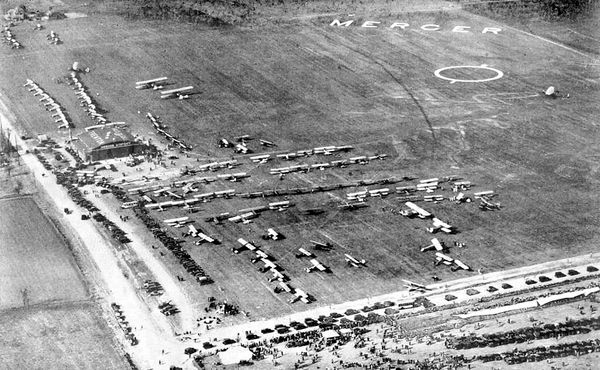
Trenton-Mercer Airport: New Jersey’s Secondary Airfield The two paid parking lots, reflecting their aviation-related purposes with the names of "Tuskegee Airmen" and "Amelia Earhart," were relatively full, indicating passenger activity here. The single short, shabby, slanted-roof terminal was the only structure that served as the interface between the land- and airside portions of the field, although the few movements now visible were those of a Cessna 172 and a business jet. A handful of picnic tables on a grass area separated from the ramp by a chain link fence were indicative of a small, hometown airport. Airport Origins and History Located in Ewing Township in Mercer County, New Jersey, the airport is within a 35-mile radius of 10 of New Jersey’s 21 counties and three of Pennsylvania’s counties, including the city of Philadelphia," according to the Airport Master Plan Update 2018 prepared in cooperation with Urban Engineers and McFarland Johnson. "It is located approximately four miles from the state capital, Trenton. "(It) is convenient for much of Pennsylvania’s greater Northeast Philadelphia region, particularly Bucks and Montgomery counties and is approximately 40 miles from Philadelphia International Airport." |
|
|
The National Archives and Records Administration (NARA) is responsible for collecting and preserving millions of records created by all branches of government. Within these records are thousands of digitized images made by the armed forces, the FAA and its predecessors, NASA, etc., that the aviation historian may find useful. |
|
|
Vol. 31, No. 3, Fall 1986 "More on the TWA Fokker F10A Crash," by Richard S. Allen We have had a relative of Knute Rockne reach out to the AAHS for assistance relating to the TWA 599 Fokker crash in which he was killed. Vol 69, No. 2. Summer 2024 – The 737 and the Thrust Reverser, or, Just One More Day by Bob Bogash Dear Sir, New Book Our friends in the Aviation Historical Society of Australia have alerted us to a new publication that may be of interest to Golden Age historians. |
|
|
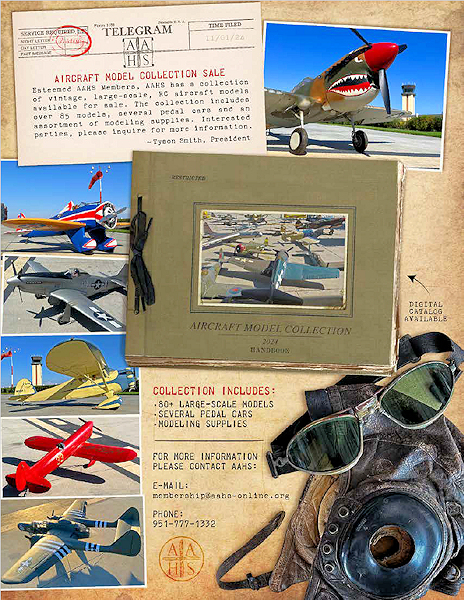
The AAHS has a collection of vintage, large-scale, aircraft models available for sale. The collection includes over 80 models, several pedal cars and an assortment of modeling supplies. |
|
|
On behalf of AAHS, I want to apologize for the extended delay in getting you the Summer AAHS Journal. Like many very small organizations, we have an extremely short ’bench,’ where losing one of our valuable contributors can have a visible, detrimental effect on meeting our objectives. And one of our most key players, Hayden Hamilton, AAHS Journal Editor, has been beset by many unanticipated challenges that have kept him from meeting publication deadlines. We’ve been adapting our workflow to transfer more publishing functions to other hands, but clearly we need to do more. To that end, for the first time, we’re outsourcing the technical layout tasks of the Journal publication and dispersing article preparation among several volunteers, instead of having them collected and reviewed by a single individual. |
|